Who is responsible for health and safety on construction sites is a question we are frequently asked.
Construction remains one of the most dangerous industries in the UK. Despite ongoing improvements in safety culture, the sector still accounts for a high proportion of fatal and serious injuries. The law is clear: health and safety responsibility sits with everyone on site, from clients to contractors. In this guide, we explain who holds which duties under current legislation, what the latest data reveals, and how Rescue2 supports safer worksites through training, risk management, and professional rescue cover.
The Current Picture of Construction Site Safety in the UK (2025 Data)
According to the Health and Safety Executive (HSE), there were 124 work related fatalities across Great Britain between April 2024 and March 2025, with 35 deaths in construction alone. Construction remains one of the highest risk sectors, accounting for more than a quarter of all workplace fatalities.
Falls from height continue to dominate the statistics, representing around 40% of construction related fatalities, followed by being struck by moving vehicles or objects.
Beyond fatalities, there were an estimated 1.7 million workers suffering from work related ill health in 2024/25, and around 604,000 non fatal injuries were reported. Of these, 469,000 were musculoskeletal disorders, conditions often linked to manual handling, repetitive strain, and awkward working positions common on site.
Why Construction Sites Carry High Risk
Every construction project brings constant change, new contractors, varying weather conditions, evolving work areas, and multiple overlapping hazards.
These include:
- Working at height on scaffolds or ladders
- Operating plant and heavy machinery
- Exposure to hazardous substances like dust, fumes, or chemicals
- Noise, vibration, and poor manual handling techniques
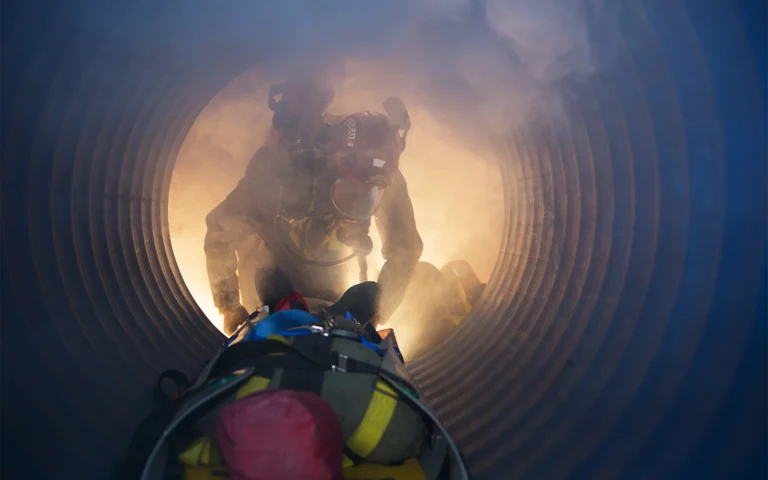
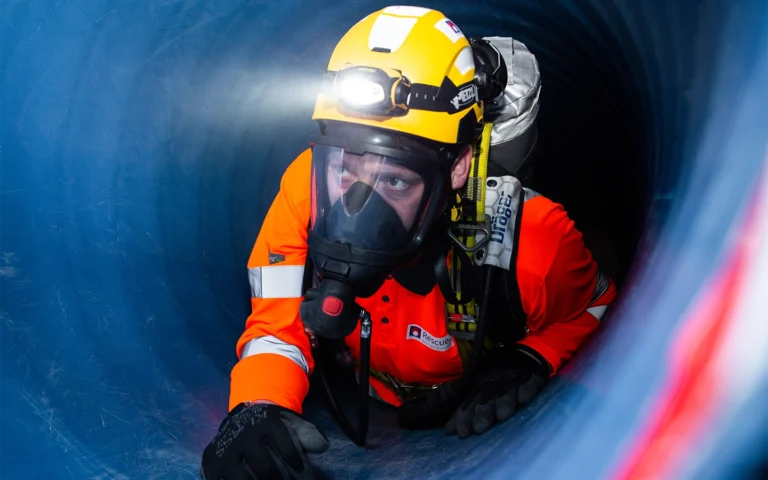
- Confined space risks such as tanks, silos, and service chambers
A strong safety culture, continuous communication, and professional training are essential to managing these risks. Rescue2’s confined space rescue and health and safety training teams work alongside contractors across the UK to ensure compliance and control in even the most challenging environments.
Understanding Legal Responsibilities
UK construction safety is governed primarily by two key frameworks:
- The Health and Safety at Work Act 1974, which outlines the general duties employers and employees owe to each other.
- The Construction (Design and Management) Regulations 2015 (CDM 2015), which define clear roles and responsibilities for all parties involved in a project.
The goal of CDM 2015 is to ensure that safety is embedded in every stage of construction, from design through to completion.
Key Duty Holders and Their Responsibilities
Clients
Clients initiate construction work, and under CDM 2015 they are responsible for ensuring that arrangements are in place to manage health and safety effectively.
This includes:
- Appointing competent duty holders (Principal Designer and Principal Contractor)
- Allowing sufficient time and resources for safe project delivery
- Ensuring welfare facilities and management systems are in place
Designers
Designers must eliminate foreseeable health and safety risks during the design stage. Where risks cannot be eliminated, they must be reduced or controlled and clearly communicated to those constructing or maintaining the structure.
Principal Designers
Appointed by the client, the Principal Designer oversees the pre construction phase and coordinates risk management between designers and contractors. They ensure all relevant information, such as structural hazards or access restrictions, is passed on before work begins.
Principal Contractors
The Principal Contractor takes charge once work moves on site.
Their duties include:
- Preparing and implementing the Construction Phase Plan
- Managing site inductions, supervision, and safe systems of work
- Ensuring subcontractors are competent and trained
- Monitoring and reviewing site safety daily
Contractors and Small Builders
Contractors are responsible for planning and carrying out construction safely. They must cooperate with others, follow site rules, and ensure that risk assessments, method statements, and welfare facilities are in place.
Typical high risk activities include working at height, hot works, lifting operations, and confined space entry, all of which require specific competence and supervision.
Training solutions for contractors: https://www.rescue2.co.uk/training/training-courses/
Workers
Every worker on site has a personal responsibility to take reasonable care for their own safety and that of others.
Workers must:
- Follow training and site rules
- Use PPE and fall protection correctly
- Report unsafe conditions immediately
- Cooperate fully with supervisors and contractors
Safety is a shared responsibility; negligence from one individual can compromise the safety of all.
Common Causes of Accidents on Construction Sites
- Falls from Height: Still the leading cause of death and major injury. Proper scaffolding, harness inspection, and edge protection are critical.
- Struck by Incidents: Moving vehicles, falling objects, and collapsing structures contribute to many fatalities.
- Manual Handling Injuries: Incorrect lifting causes thousands of musculoskeletal disorders every year.
- Electrocution: Contact with overhead or underground power lines remains a persistent hazard.
- Unsafe Access or Scaffolding: Weak structures or poor inspection regimes lead to catastrophic accidents.
Preventing these incidents requires robust risk assessments, supervision, and ongoing training, principles that form the foundation of every Rescue2 programme.
How to Reduce Risk Through Training and Planning
Effective health and safety on construction sites depends on competence. Under Regulation 8 of CDM 2015, everyone involved must have the skills, knowledge, and training necessary to perform their role safely.
Rescue2 offers bespoke training solutions designed for the construction environment, including:
- Confined Space Safety and Rescue Training
- Working at Height
- Breathing Apparatus Industrial Wearer Courses
- Fire Safety and Risk Management Training
- Site Emergency Response and Rescue Provision
Each course is delivered by industry professionals with emergency service backgrounds, ensuring the training is not only compliant but realistic and experience based.
Explore available courses: https://www.rescue2.co.uk/training/training-courses/
Frequently Asked Questions About Construction Site Safety
Who is legally responsible if a worker is injured on a construction site?
Responsibility depends on the cause. Employers, contractors, or site managers can all be held liable if injury results from inadequate risk control or training. Under the Health and Safety at Work Act 1974, employers have a legal duty of care.
What training must construction workers have?
At a minimum, site workers require general induction training, awareness of the site’s risk assessments and method statements, and specific instruction for tasks such as confined space entry or working at height. Rescue2’s bespoke programmes can be tailored to meet CDM 2015 competence requirements.
Do small building companies need a Principal Contractor?
Yes. If more than one contractor is working on a project, a Principal Contractor must be appointed regardless of project size. The Principal Contractor coordinates site safety and compliance.
How often should risk assessments be updated?
Risk assessments should be reviewed whenever conditions change, following any incident, or at least annually. Dynamic risk assessments are encouraged for active sites with shifting hazards.
What should be included in a Construction Phase Plan?
The Construction Phase Plan should outline project specific health and safety arrangements, emergency procedures, and welfare provisions. It must also identify key risks and how they will be managed.
Guidance: https://www.hse.gov.uk/construction/cdm/2015/construction-phase-plan.htm
Building a Safer Construction Culture with Health and Safety on Construction Sites
The construction sector’s risks are well known, but so are the solutions. Clear communication, strong leadership, and competent training can dramatically reduce injuries and save lives. Safety should not be treated as merely compliance; it should be an integral part of the culture on every site.
At Rescue2, we work with construction companies across the UK to deliver professional safety training, technical rescue support, and peace of mind that every worker goes home safely at the end of the day.
📞 01903 871 105
✉️ training@rescue2.co.uk
📍 Rescue2 Ltd, The Old Stables, Decoy Lane, Arundel Road, Poling, West Sussex BN18 9QA