What is confined space rescue cover for sewer cleaning?
Sewer cleaning and maintenance are among the most hazardous activities in the utilities sector. Every entry into an underground sewer, chamber or manhole is classified as confined space work under UK law. The Confined Spaces Regulations 1997 make it clear: employers must plan, equip and rehearse emergency rescue arrangements before anyone enters.
At Rescue2, we provide fully qualified confined space rescue teams for sewer operations nationwide. Our specialists combine frontline emergency service experience with an in depth understanding of the water industry’s standards and classification system. We protect workers, contractors and the public while helping organisations stay compliant and productive.
Why Sewer Cleaning Is High Risk Work
Sewers and drainage networks are among the most extreme working environments in the UK. Conditions can change in seconds due to atmospheric shifts, incoming flows, or mechanical failure.
The Health and Safety Executive (HSE) lists sewers alongside tanks, ducts and silos as confined spaces that carry reasonably foreseeable risks such as:
- Toxic or flammable gases (e.g. methane, hydrogen sulphide)
- Oxygen deficiency caused by biological activity or chemical reactions
- Drowning, engulfment or entrapment by free flowing liquids or solids
- Heat stress and poor ventilation
- Slips, falls and restricted egress routes
Because of these hazards, sewer cleaning is almost always categorised as medium to high risk confined space work (NC3 – NC4) under the Water UK Classification Scheme, meaning specialist rescue cover is legally and operationally required.
The Legal Framework: Your Duty of Care
Three primary pieces of legislation govern confined space work in sewer environments:
- Confined Spaces Regulations 1997 – The core regulation requires employers to:
- Avoid entry wherever possible
- Implement a safe system of work if entry is unavoidable
- Provide suitable and sufficient emergency arrangements before entry
- Avoid entry wherever possible
- Health and Safety at Work etc. Act 1974 – Sets the general duty to protect employees and others affected by work activities, including contractors, agency staff and the public.
- Management of Health and Safety at Work Regulations 1999 – Requires risk assessment, competent persons and coordinated planning between employers and contractors.
Failure to comply can lead to prosecution, enforcement notices and, more importantly, serious injury or loss of life.
New 2025 Context: Rising Scrutiny in Water and Sewerage Operations
In June 2025, the Water (Special Measures) Act introduced new obligations on water companies to publish Pollution Incident Reduction Plans (PIRPs) and demonstrate stronger operational governance. While environmental in focus, it has indirectly raised expectations for site safety, contractor management and emergency readiness during sewer work.
With regulators demanding transparent risk management and performance data, documented and competent rescue provision has become a key indicator of professional compliance.
What Proper Rescue Provision Looks Like
Under HSE’s Approved Code of Practice (L101), emergency arrangements must be:
- Planned: The rescue method must be defined in writing, not improvised.
- Resourced: The correct equipment, tripods, winches, harnesses, breathing apparatus, must be available and maintained.
- Competent: All personnel involved must be trained and medically fit.
- Rehearsed: The plan must be tested to ensure it works in real conditions.
A generic first aid response is not sufficient. Rescue2’s model ensures readiness for every likely scenario.
The Rescue2 Approach to Sewer Safety
1. Specialist confined space rescue teams
Each deployment includes:
- Team Leader: oversees site liaison, permits to work and dynamic risk assessment.
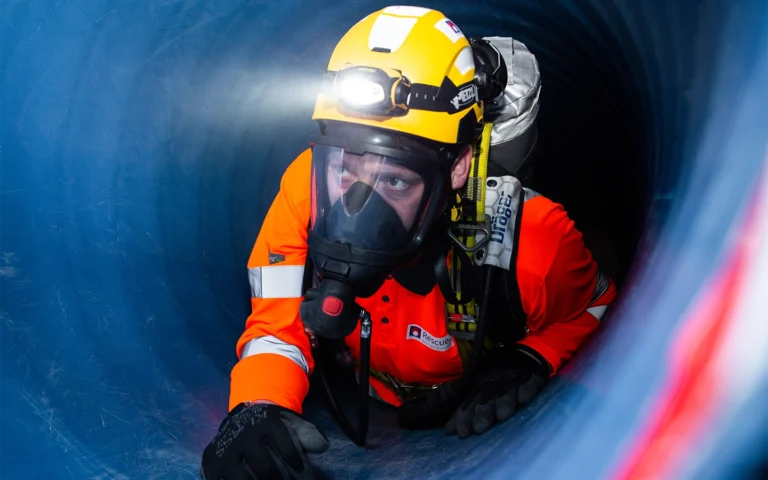
- Rescue Technicians: minimum two per entry, qualified to City & Guilds 6150 Level 4 (High Risk).
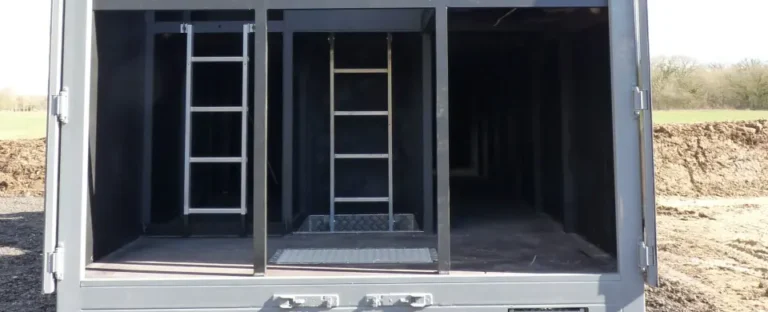
- Dedicated Rescue Vehicle: carrying calibrated gas monitors, breathing apparatus, retrieval systems, stretchers and medical equipment.
Our technicians have backgrounds in emergency services, hazardous materials response, and industrial rescue, ensuring the capability to handle incidents in hostile or contaminated environments.
2. Dynamic risk assessment and control
Every site is different. We conduct pre entry assessments that consider weather, flow rates, contamination levels, access points, and communication systems. During operations, our leaders continually review atmospheric conditions using multi gas detection and ventilation systems, updating controls in real time.
This dynamic model means teams are constantly working with the latest data, not assumptions made in a planning office weeks earlier.
3. Integrated emergency response
In the event of an incident, Rescue2 provides immediate intervention, including:
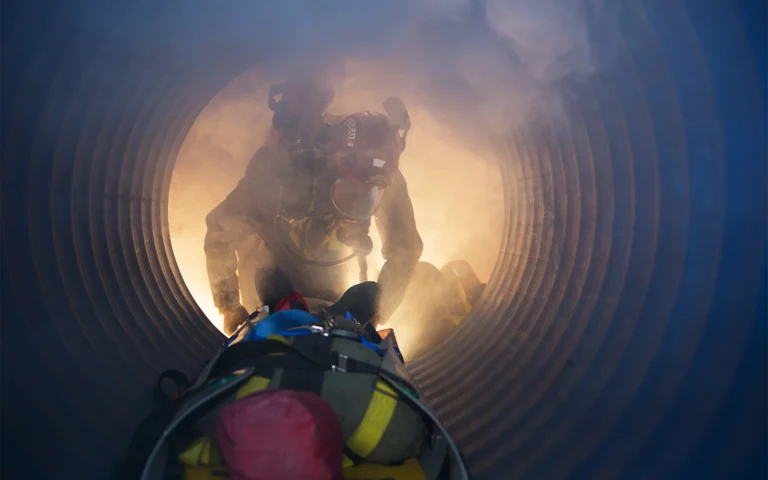
- Safe extraction using tripods, winches and stretchers
- Airline or self contained breathing apparatus rescues
- First aid and paramedic care on site
- Coordination with local emergency services
Our goal is not just to respond, but to prevent escalation through constant monitoring and proactive control measures.
4. Training and competence
Rescue2 also delivers EUSR and City & Guilds confined space training tailored to water industry standards. Delegates learn to assess hazards, implement safe systems of work and coordinate emergency plans.
By combining operational rescue with accredited training, we ensure everyone on site, from supervisors to contractors, works to the same high standard of safety and communication.
Real World Application: Sewer Cleaning in Whitechapel, London
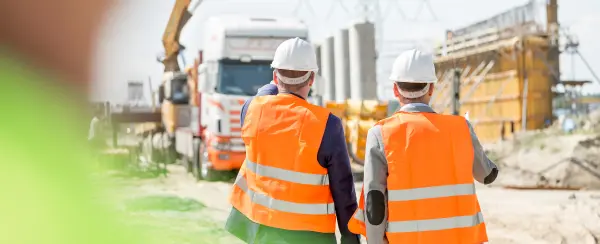
One recent project saw Rescue2 deployed to support a Thames Water sewer cleaning operation in Whitechapel. Our core team, comprising one leader, two rescue technicians, and a fully equipped rescue unit, provided high risk entry cover for jetting and vacuuming activities.
Continuous atmosphere monitoring, confined space control and immediate rescue readiness enabled the contractor to complete the work safely and on schedule.
This approach is typical of our national coverage: scalable, professional and built around real operational need.
LINK THIS WHEN WS COMPLETED
The Business Case for Professional Rescue Cover
Beyond compliance, professional rescue provision delivers measurable advantages:
- Reduced downtime – Incidents are managed immediately on site.
- Regulatory assurance – Auditable records demonstrate compliance during inspections.
- Reputation protection – A clear safety record supports tenders and partnerships.
- Worker confidence – Teams perform better when they know expert backup is in place.
Safety appropriately done is not an overhead; it is a driver of reliability and trust.
Why Utilities and Contractors Choose Rescue2
- National 24/7 availability and rapid mobilisation
- Teams drawn from emergency service backgrounds
- Full rescue vehicle fleet with modern life support equipment
- Integration with the client and water authority safety systems
- Compliance with HSE ACOP L101 and Water UK classification standards
- Proven track record in sewer, tunnel and confined space projects nationwide
Wherever underground work takes place, we ensure that every entry starts safe, works safe and ends safe.
Contact Rescue2
To arrange confined space rescue cover for sewer cleaning or other underground operations, contact our coordination team:
📞 01903 871 105
✉️ info@rescue2.co.uk
📍 Rescue2 Ltd, The Old Stables, Decoy Lane, Arundel Road, Poling, West Sussex BN18 9QA
Start Safe. Work Safe. Go Home Safe.
Frequently Asked Questions About Confined Space Rescue Cover for Sewer Cleaning
Why do sewer cleaning teams need confined space rescue cover?
Because every sewer, chamber or drain is classed as a confined space under UK law. The environment can contain toxic gases, low oxygen or flowing water, all of which pose serious risks. The HSE’s Confined Spaces Regulations 1997 require that no entry takes place unless a competent rescue plan and trained team are in place.
What law governs confined space work in sewers?
The Confined Spaces Regulations 1997 sit under the Health and Safety at Work etc. Act 1974. These laws make employers legally responsible for assessing risks, preventing entry where possible, and ensuring emergency arrangements are ready before anyone goes underground.
Who is responsible for rescue provision during sewer maintenance?
The employer or principal contractor organising the work. Water authorities, utilities, or subcontractors must ensure that suitable rescue provisions are in place for everyone on site, including agency staff. You can’t rely on the emergency services to provide that response; it must be planned, resourced and competent before entry begins.
What are the main dangers in sewer cleaning?
Common hazards include:
Methane and hydrogen sulphide gas buildup
Oxygen depletion
Flooding or entrapment from incoming flows
Heat stress and exhaustion
Limited access and poor visibility
These risks can change rapidly, which is why real time atmospheric testing and trained rescue standby are essential.
How is confined space work in the water industry classified?
The Water UK Confined Space Classification Scheme divides work into risk levels NC1–NC4.
NC1 – Low risk (shallow, open areas)
NC4 – High risk (deep, complex, or hazardous atmospheres)
Sewer cleaning often falls into NC3 or NC4, meaning specialist rescue personnel and full breathing apparatus capability are required.
What’s changed in 2025 for water sector safety?
The new Water (Special Measures) Act 2025 increased regulatory scrutiny of water companies and contractors. It now requires them to publish Pollution Incident Reduction Plans and demonstrate stronger governance, including transparent site safety and emergency response planning. Professional rescue cover helps meet those expectations.
What makes Rescue2’s sewer rescue teams different?
Every technician comes from an emergency service background and holds City & Guilds 6150 Level 4 High Risk Confined Space certification. We operate 24/7 with fully equipped rescue vehicles that carry breathing apparatus, tripods, stretchers, gas monitors, and paramedic grade medical kits.
How do Rescue2 teams prepare before sewer entry?
We conduct a dynamic risk assessment on site, verifying flow rates, gas levels, ventilation, and communication systems. The plan is adjusted throughout the operation to reflect real time readings, ensuring crews stay safe from entry to extraction.
What happens if there’s an emergency underground?
Rescue2 teams initiate immediate rescue using retrieval systems and breathing apparatus. Casualties are stabilised and extracted quickly for medical assessment. Because our personnel are cross trained in rescue and paramedic response, we can deliver lifesaving treatment within seconds.
How can I book confined space rescue cover for sewer work?
Just contact our coordination desk on 01903 871 105 or email info@rescue2.co.uk. We’ll review your project scope, classification level and location, then design a rescue and safety plan compliant with HSE ACOP L101 and Water UK standards.