What are the benefits of using our mobile confined space and breathing apparatus training unit?
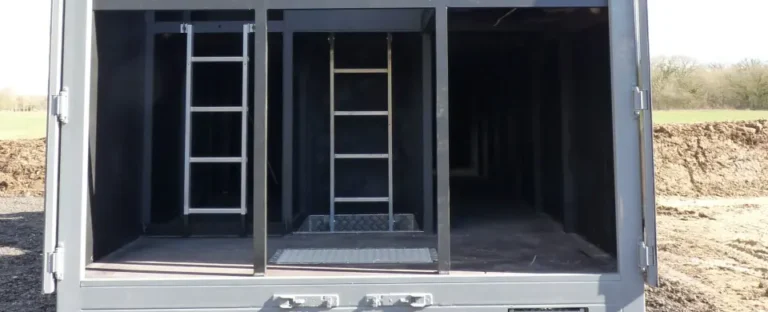
Taking teams off site for confined space training is costly, disruptive and often too generic. Our mobile training unit brings realistic tunnels, vertical access, monitoring and rescue practice to your location. This aligns with the Confined Spaces Regulations, strengthens rescue arrangements and builds real world confidence around respiratory hazards.
The Problem We Solve
Confined spaces carry invisible hazards. Atmospheres can shift from safe to lethal without warning. That is why the law sets a clear order: avoid entry if you can, use a safe system of work if you cannot, and put adequate emergency arrangements in place before work starts. Training is not a box tick. It is the foundation that makes plans credible in real conditions.
HSE’s Approved Code of Practice L101 explains how to assess spaces, control entry and plan rescue. We use that framework to design training that mirrors your actual risks rather than hypothetical scenarios.
Why Mobile Delivery Beats Off Site Classrooms
Less disruption, more relevance. By bringing the unit to you, we avoid travel and downtime, and we tailor drills to your plant, access routes, and communications.
Better engagement. People learn more effectively when the environment feels familiar and the consequences are clear and visible.
Faster mobilisation. The unit is self contained and quick to set up, so your operations remain productive while teams rotate through realistic scenarios.
What We Simulate in the Unit
- Horizontal and vertical entries with ladder or tripod access to reflect tanks, silos and pits typical on industrial and utilities sites.
- Atmosphere testing and control using methods aligned with HSE guidance, including pre entry checks and continuous monitoring where required.
- Communications and control that support a safe system of work, including entry permits, control points and handover routines consistent with recognised permit to work principles.
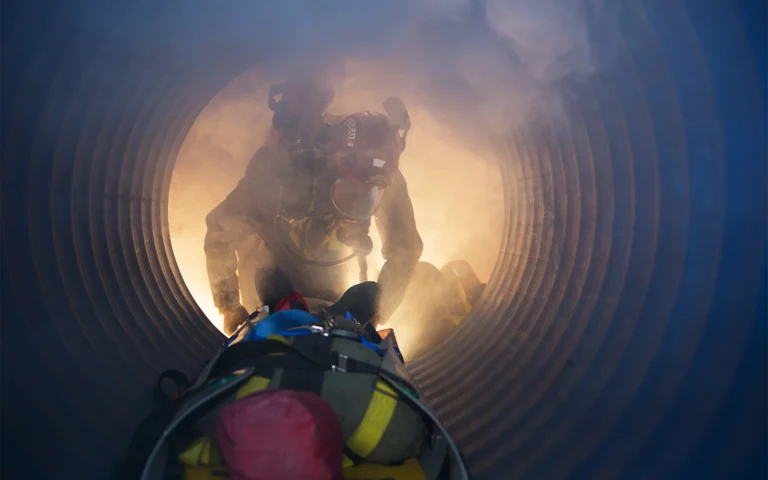
- Rescue and recovery that reflect the rescue plan you actually need, not a generic checklist. We rehearse extraction, first response and handover.
Breathing Apparatus Competence That Lasts
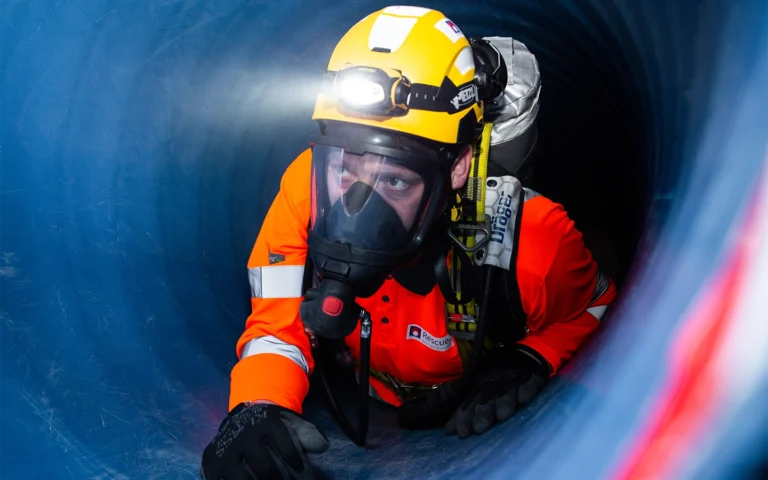
When there is a risk of oxygen deficiency or exposure to contaminants, respiratory protection may be necessary. We teach selection and use in line with HSG53 so delegates understand why the equipment is chosen, how to don it, how to check the seal and how to store and maintain it so it remains effective. We also explain limits that are sometimes overlooked, such as the fact that filtering respirators do not protect against oxygen deficient atmospheres.
We connect this theory to practice in the unit. Delegates experience realistic, low visibility movement, controlled stress, and communication challenges, so that user checks and emergency transitions become second nature. For processes such as welding in confined locations, we refer to HSE’s specific guidance on asphyxiation hazards and the need to establish rescue arrangements before entry.
How Do We Align Training With the Regulations?
The Confined Spaces Regulations are clear that avoiding entry is the priority. Where entry is unavoidable, the safe system of work and rescue arrangements must be proportionate to the risk.
Our programmes make that real by:
- Starting with avoidance. We ask whether the task can be performed from outside using cleaning, remote tooling, or improved inspection methods.
- Teaching practical risk assessment. We focus on the specific space, not a template. Delegates learn to evaluate sources of contamination, isolation points, and the conditions that would stop work.
- Embedding permits that work. We help you set up simple permits that control isolation, atmosphere testing, supervision, and communication without overwhelming teams with paperwork.
- Rehearsing the rescue plan. We run drills that test the response and expose weak points in communications and extraction routes so you can improve the plan before a real emergency.
The Business Case for Mobile Training
- Lower total cost. You avoid travel and accommodation, reduce paid unproductive hours and keep standby cover on site.
- Higher relevance and retention. People train in scenarios that match their work, so lessons stick and behaviours change.
- Better audit outcomes. Documented training tied to your actual spaces and equipment makes it easier to demonstrate competence and fulfil due diligence requirements.
- Faster culture shift. Realistic drills build confidence and encourage people to speak up when conditions are not right.
What a Typical Delivery Looks Like
Before we arrive. We request a brief overview of your spaces, work patterns, and equipment. We identify the most likely entries and the rescue resources you have on site.
On the day. The unit is positioned safely; we conduct dynamic risk assessments and agree on exclusion zones. We brief each group, then rotate delegates through practical stations: pre entry checks, gas monitoring, communications, controlled entry, rescue extraction and debrief.
Afterwards. You receive a concise report with findings, suggested improvements to the rescue plan and evidence of training for your records. Where RPE is in use, we can coordinate face fit and user training support consistent with HSG53.
Where Clients See the Most Significant Gains
- Clearer decisions at the hatch. Teams recognise when conditions do not meet the plan and stop entry.
- Cleaner permits. Supervisors eliminate distractions and focus on the few things that truly matter.
- Ready to go rescues. Standby personnel are familiar with their roles, and extraction paths have been proven effective.
- Better respiratory discipline. People choose the proper protection, check the seal and maintain the kit correctly.
Bringing It Back to First Principles
A mobile training unit is not a gimmick. It is a practical way to turn regulations and guidance into capability on your site. It reduces disruption, raises standards and gives your people the confidence to apply the rules when it counts. That is how we move from paperwork to protection.
Contact us: 01903 871 105 • info@rescue2.co.uk
Frequently Asked Questions About The Benefits of Using a Mobile Confined Space and Breathing Apparatus Training Unit
What makes mobile training more effective than a classroom?
It minimises disruption and lets us recreate your real entries, communications and rescue paths so learning sticks.
Can you tailor scenarios to our specific tanks and silos?
Yes. We map your spaces and design entries and rescues that reflect your plant, while adhering to the ACOP’s principles.
Will this help us pass audits?
It helps demonstrate competence, a safe system of work and rehearsed emergency arrangements, which auditors expect to see.
Do you cover RPE selection and fit checks?
We teach selection, user checks and maintenance in line with HSG53. We can support face fit where required.
Do you cover RPE selection and fit checks?
We teach selection, user checks and maintenance in line with HSG53. We can support face fit where required.